Some life insurance policies do more than provide a death benefit.
Permanent policies may also accumulate value inside the contract over time.
This is known as cash value.
Which Policies Build Cash Value?
Cash value is generally associated with permanent life insurance.
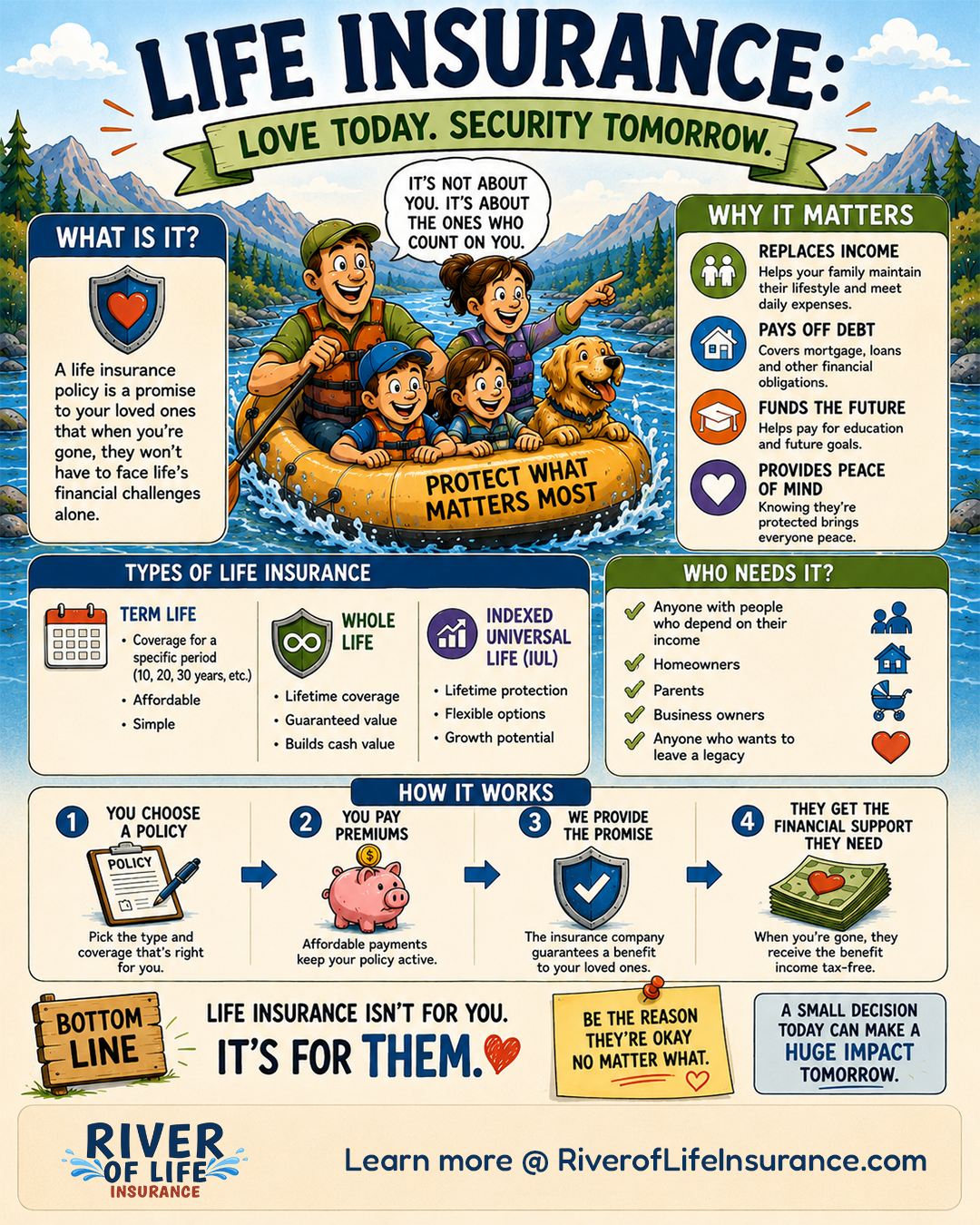
Examples include:
- Whole life insurance
- Universal life insurance
- Indexed universal life insurance
- Variable universal life insurance
Different policy types accumulate value in different ways.
Term life insurance normally does not have a cash value component.
How Does Cash Value Accumulate?
Part of the premium paid into a permanent policy may support the cost of insurance and other policy expenses, while policy value develops according to the terms of the contract.
How growth occurs depends on the policy.
Whole life may include guaranteed cash value accumulation.
Universal life may credit interest according to declared rates.
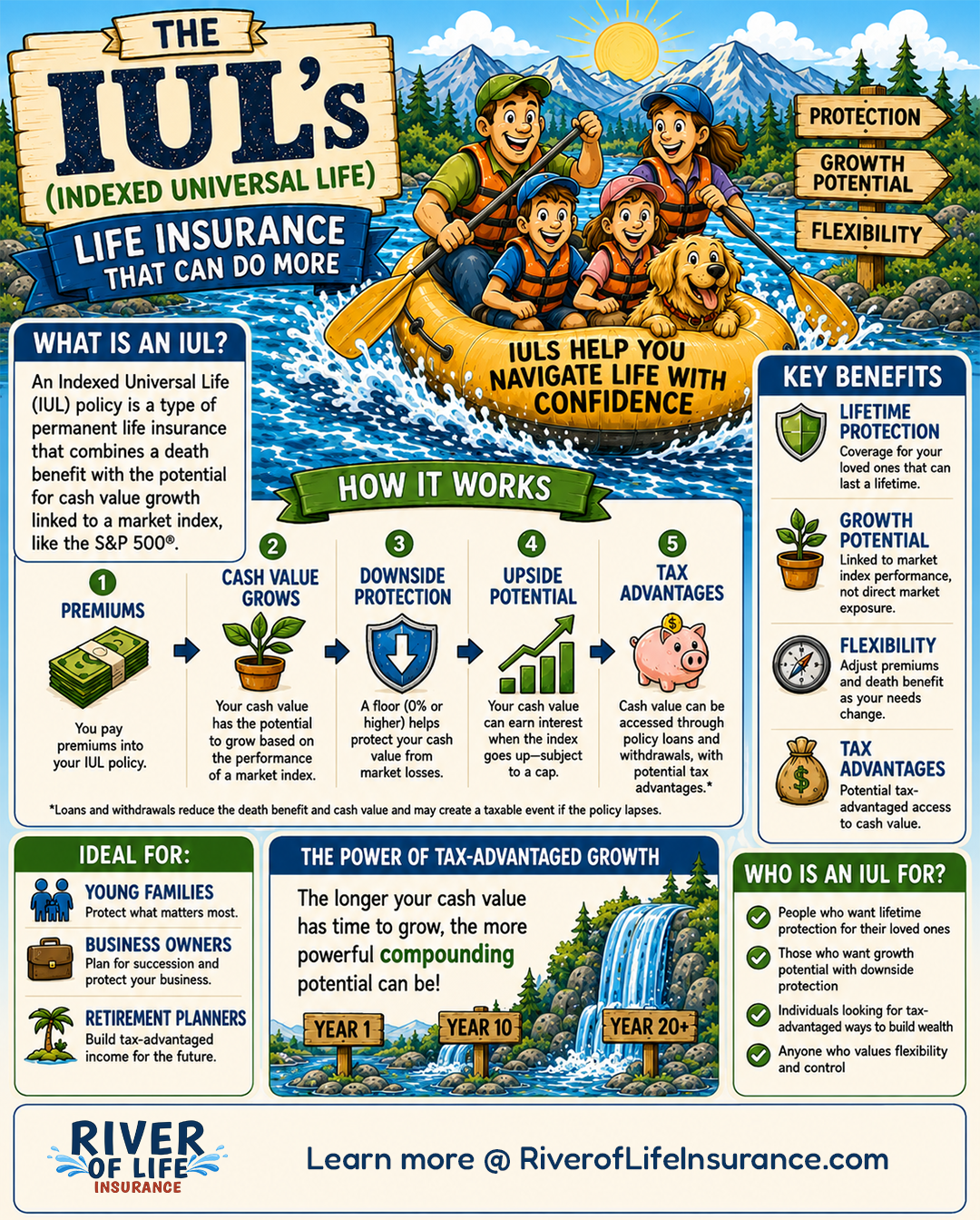
Indexed universal life may credit interest based partly on the performance of a market index according to specified formulas.
Variable policies may offer investment subaccounts and involve market risk.
Is Cash Value the Same as a Savings Account?
No.
Cash value is part of an insurance contract.
That means policy charges, surrender rules, insurance costs, loans, withdrawals, tax rules, and death benefit provisions all affect how the money works.
It should not be evaluated as though it were simply a bank account.
How Can You Access Cash Value?
Depending on the policy, owners may be able to access available value through:
Withdrawals. Money is removed from the policy and may reduce the death benefit.
Policy loans. The insurance company lends money using the policy value as collateral.
Policy surrender. The policy is terminated and the owner receives the available surrender value after applicable charges and outstanding loans.
Each option can have consequences.
Are Policy Loans Tax-Free?
You may hear policy loans described as “tax-free income.”
That wording can oversimplify a much more complicated subject.
Policy loans are generally loans rather than taxable distributions when structured properly. However, tax consequences can arise depending on factors such as policy classification, withdrawals, gain in the contract, outstanding loans, and whether the policy remains in force.
A policy that lapses or is surrendered with outstanding loans can create unexpected taxable income.
Tax strategies should therefore be reviewed with qualified tax professionals.
Why Do People Use Cash Value Policies?
Cash value insurance may be considered for goals such as:
- Permanent death benefit protection
- Long-term accumulation
- Supplemental retirement planning
- Legacy planning
- Business planning
- Access to liquidity
- Certain tax-conscious strategies
The policy must be designed around the objective.
A policy optimized primarily for death benefit may look very different from one designed to emphasize cash accumulation.
Funding Matters
Cash value life insurance is not automatic wealth creation.
The amount and timing of premiums can substantially influence policy performance.
Underfunded policies may accumulate significantly less value and, depending on the product, can be more vulnerable to future performance problems.
Proper design, realistic assumptions, and regular reviews are critical.
Insurance First, Strategy Second
Cash value can be a powerful feature, but it exists inside a life insurance contract.
The foundation should always be a legitimate insurance need and a properly structured policy.
Once that foundation exists, cash value may provide additional flexibility that can become part of a broader financial strategy.