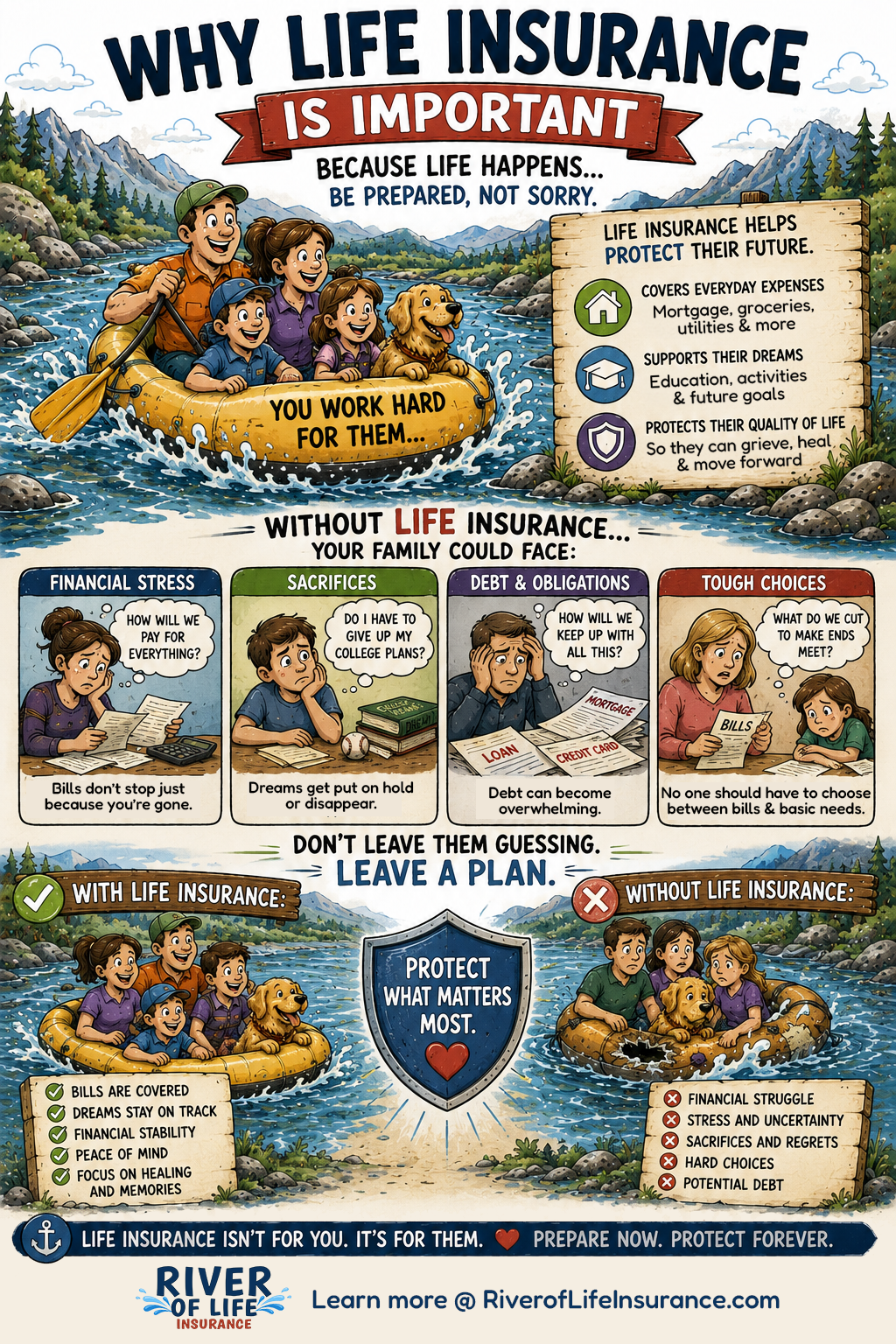
Imagine a married couple in their mid-30s with two young children, a mortgage, two incomes, retirement savings, and college goals.
Their largest risk is the loss of years of future income.
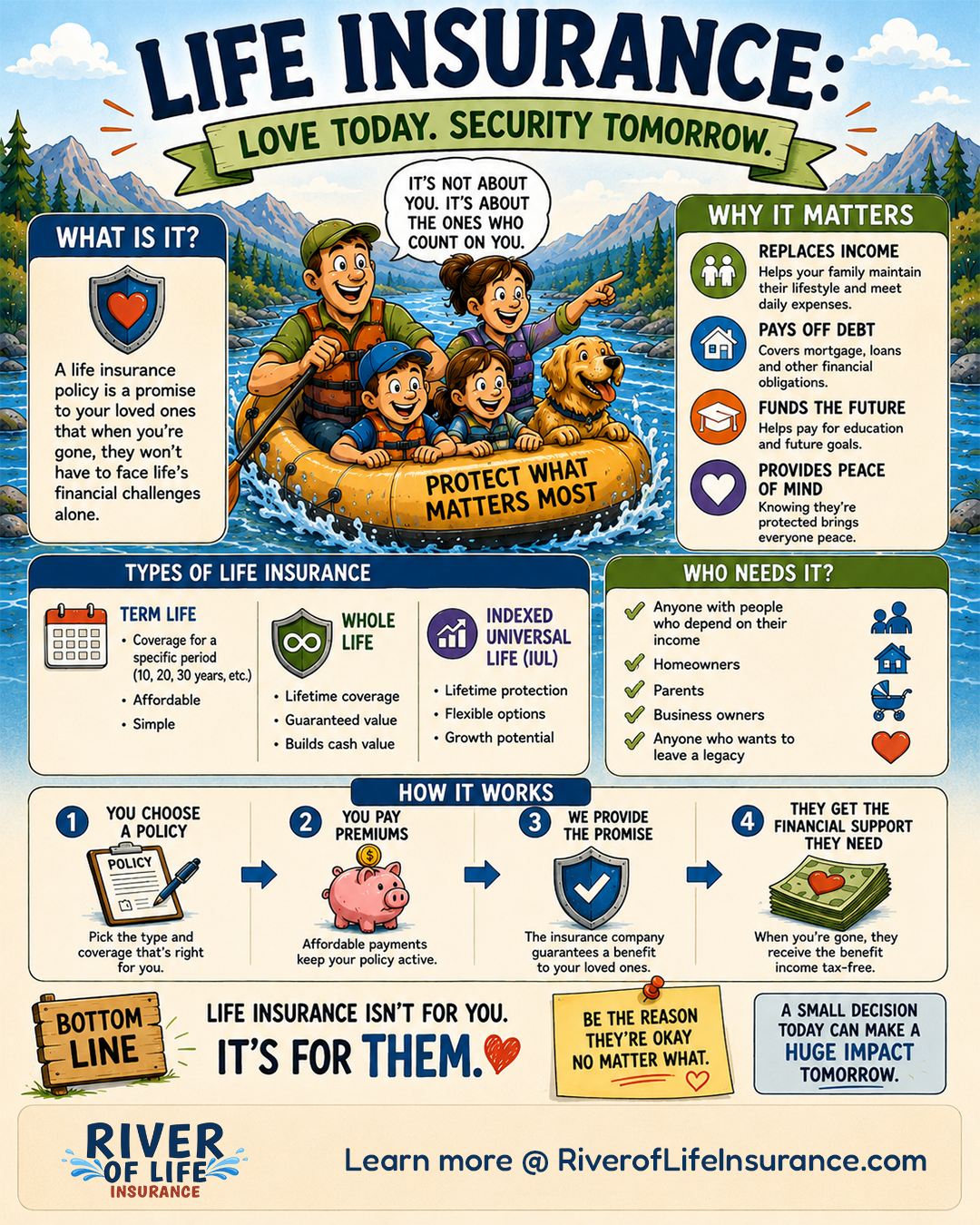
A large term policy may efficiently protect the years until the children are independent, the mortgage is smaller, and retirement assets are larger.
The couple may also consider a smaller permanent policy for lifelong goals such as final expenses, legacy, or cash value.
Layering coverage can create a larger total death benefit during the years when responsibilities are highest while preserving some permanent protection later.
The lesson is not that every family should use this exact structure. It is that different policies can be assigned different jobs.
This example is hypothetical and provided for educational purposes only.
How to Read This Case Study
A case study is most useful as a way to understand the decision process, not as a recommendation to copy the exact structure. The hypothetical family or business in this example has a particular mix of income, obligations, assets, and priorities. Change any one of those variables and the appropriate coverage amount or product mix may change as well. Use the example to identify the questions that should be asked in a real planning conversation: what risk is being transferred, how long that risk exists, what resources are already available, and what tradeoffs come with each solution.
Build the Decision From the Inside Out
Begin with the need, then work outward to the product. The core issues here are education and financial skills for heirs, the need for liquidity to avoid forced asset sales, and which assets are intended to pass to future generations. Once those are clear, evaluate how businesses or real estate will be managed after death and beneficiary and trust structures. This order matters because it prevents the features of a particular product from defining the problem after the fact.
A strong plan should also be understandable to the person who owns it. If the strategy only makes sense when described with a long chain of optimistic assumptions, it deserves additional scrutiny. Simpler does not always mean better, but clarity is a meaningful form of risk control.
Common Mistakes to Avoid
Allowing beneficiary designations to become outdated. This can create a mismatch between what the owner expects and what the policy or strategy actually provides.
Assuming a will alone coordinates every beneficiary-designated asset. The contract language and long-term economics matter more than a simplified label.
Leaving complex assets to heirs without a management plan. Liquidity, taxes, guarantees, and opportunity cost should be considered before committing money.
Focusing only on the size of an inheritance rather than stewardship. A strategy should be reviewed when the assumptions behind it materially change.
Failing to coordinate business succession with personal estate planning. The right tool is the one that solves the defined problem without creating a larger one elsewhere in the plan.
What to Confirm Before Making the Decision
Use these questions as a final check:
What do we want the next generation to receive?
How should assets be managed before heirs take control?
Where will estate liquidity come from?
How will a family business transfer without disrupting operations?
What knowledge should accompany the financial assets we leave behind?
The answers should be consistent with the actual contract and with the rest of the financial plan, not merely with a sales illustration or a generalized online example.
When to Review This Part of the Plan
This topic deserves another look whenever the assumptions behind the original decision change. Useful review triggers include a marriage, divorce, birth, death in the family, business-value change, estate-plan revision, or change in the capabilities or needs of an heir. A review does not automatically mean a policy should be replaced or a strategy should be changed. It is simply a checkpoint to confirm that the original need still exists, the contract is behaving as expected, and the current plan still fits the household or business. If a replacement is being considered, compare the existing and proposed coverage carefully before giving up benefits, guarantees, pricing, or rights that may be difficult to recreate later.
Bottom Line
The best answer is the one that fits the actual financial objective, remains affordable, and is understood well enough to manage over time. Review the policy contract rather than relying only on marketing language, and distinguish guaranteed provisions from projections or assumptions. When tax, legal, estate, investment, or complex business issues are involved, general education should be paired with advice from the appropriately qualified professional.