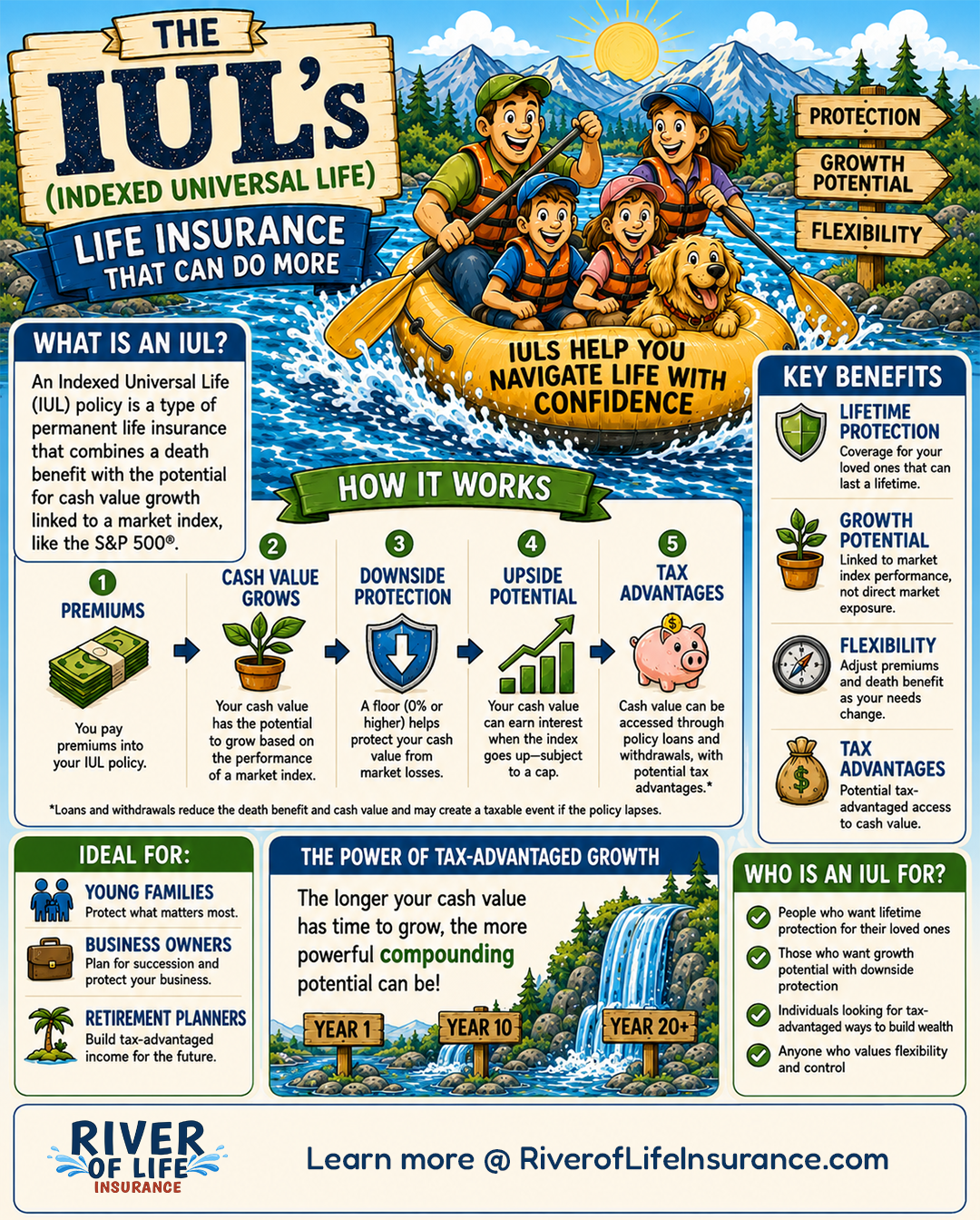
When people describe a life insurance policy as overfunded, they generally mean the policy is intentionally designed to accept substantially more premium than the minimum required while still remaining within applicable life insurance tax rules.
The objective is often to emphasize cash value accumulation rather than maximizing death benefit for the lowest possible premium.
Why Design Matters
A policy designed primarily for death benefit may look very different from one designed for cash accumulation, even when both use the same insurance product.
What Is a MEC?
Federal tax law limits how quickly certain life insurance policies can be funded. A contract that exceeds those limits may become a Modified Endowment Contract, or MEC.
A MEC remains life insurance, but lifetime distributions receive different tax treatment.
A MEC is not automatically bad, but accidentally creating one can undermine a strategy that was designed around tax-advantaged access to cash value.
Overfunding is not guaranteed wealth creation. Policy expenses, crediting, funding, and management still matter.
Cash Value Is Part of an Insurance Contract
Cash value should not be evaluated as though it were a separate bank or brokerage account. It develops under the terms of a life insurance contract and is affected by premiums, insurance costs, surrender provisions, crediting or guarantees, withdrawals, and policy loans. The amount shown in an illustration is useful only when you understand which values are guaranteed, which are projected, and what would happen if funding or performance differs from the original assumptions.
The Details That Often Matter More Than Expected
Consumers frequently focus on the most visible feature of a policy, but long-term results can depend on less obvious details. In this case, pay attention to how quickly cash value is expected to develop, the policy’s guaranteed and non-guaranteed values, and surrender charges and early liquidity. Also review loan interest and the effect of borrowing and the premium level needed to support the intended design. A small contractual detail can become important years later when someone wants to access money, change coverage, retire, sell a business, or transfer assets to heirs.
This is also why comparisons should use the same time horizon and the same objective. A product designed for temporary protection should not be judged by the same criteria as one designed for permanent coverage or retirement income. The relevant question is whether the product does its assigned job efficiently and predictably enough for the person using it.
Common Mistakes to Avoid
Assuming cash value and death benefit are always paid separately. This can create a mismatch between what the owner expects and what the policy or strategy actually provides.
Borrowing without tracking loan interest. The contract language and long-term economics matter more than a simplified label.
Surrendering a policy without checking tax consequences. Liquidity, taxes, guarantees, and opportunity cost should be considered before committing money.
Evaluating only an illustrated high-crediting scenario. A strategy should be reviewed when the assumptions behind it materially change.
Treating cash value like an unrestricted bank account. The right tool is the one that solves the defined problem without creating a larger one elsewhere in the plan.
Questions for an Insurance or Financial Review
Bring these questions to the conversation: How do loans affect the death benefit and policy sustainability? What values are guaranteed? What happens on surrender, lapse, or death? Then confirm when does meaningful cash value become available? and what happens if premiums are reduced or stopped? A clear answer should include both the benefit and the tradeoff, not just the most favorable feature.
When to Review This Part of the Plan
This topic deserves another look whenever the assumptions behind the original decision change. Useful review triggers include before taking a loan, reducing premiums, changing the death benefit, surrendering the policy, or beginning a long-term distribution strategy. A review does not automatically mean a policy should be replaced or a strategy should be changed. It is simply a checkpoint to confirm that the original need still exists, the contract is behaving as expected, and the current plan still fits the household or business. If a replacement is being considered, compare the existing and proposed coverage carefully before giving up benefits, guarantees, pricing, or rights that may be difficult to recreate later.
Bottom Line
The best answer is the one that fits the actual financial objective, remains affordable, and is understood well enough to manage over time. Review the policy contract rather than relying only on marketing language, and distinguish guaranteed provisions from projections or assumptions. When tax, legal, estate, investment, or complex business issues are involved, general education should be paired with advice from the appropriately qualified professional.