Generational wealth is financial value that moves from one generation to another.
It can include investments, real estate, businesses, life insurance proceeds, retirement assets, intellectual property, education, and financial knowledge.
Building generational wealth begins with creating financial strength during your own lifetime through income growth, savings, investing, business ownership, debt management, and risk protection.
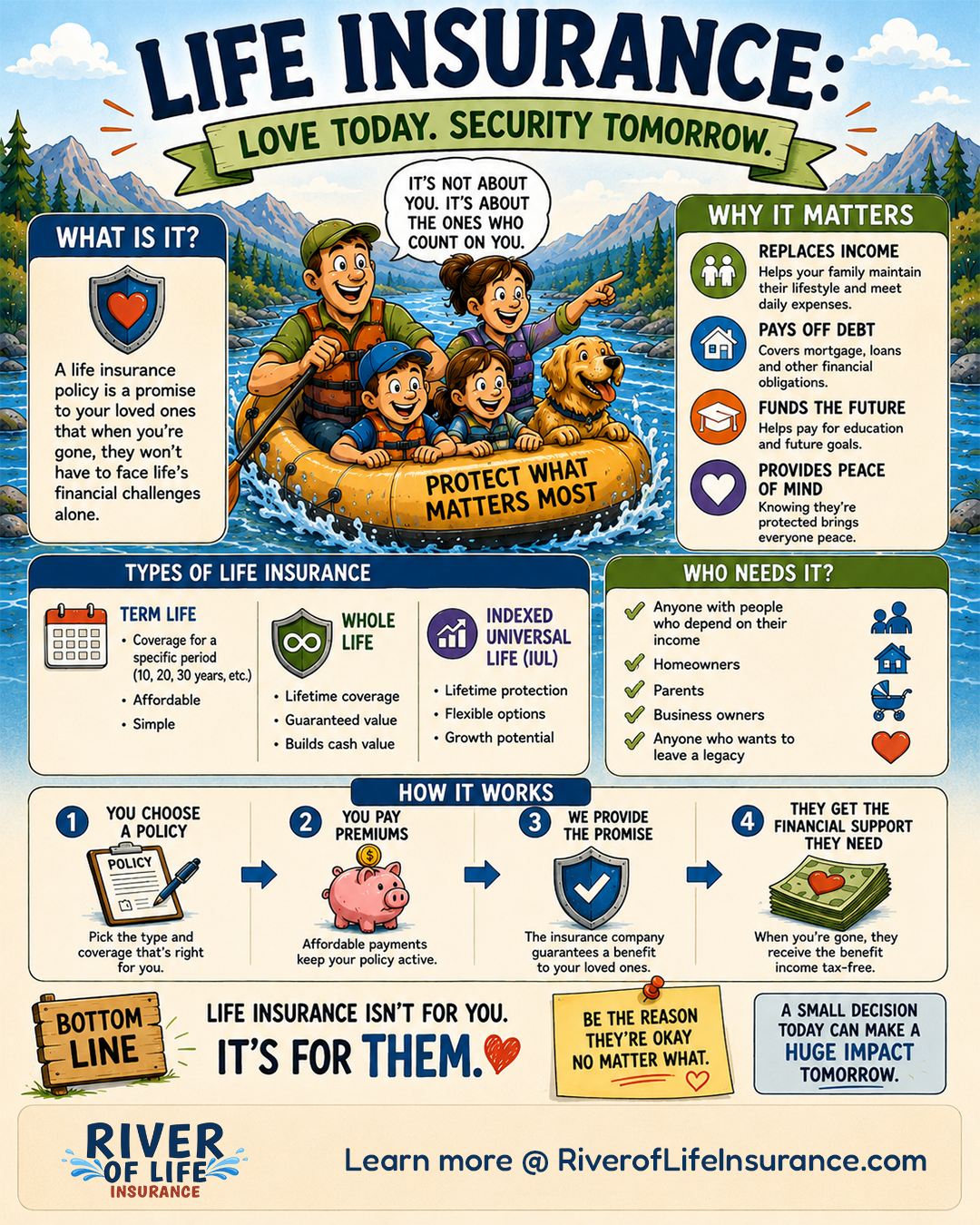
Life insurance can create a death benefit that transfers value even when someone has not yet accumulated a large estate.
Estate planning helps determine how assets are owned and transferred. Education matters too, because money alone does not guarantee that wealth survives future generations.
Generational wealth is ultimately about leaving the next generation with greater financial opportunity and a clearer financial foundation.
Start With the Financial Need
The most useful way to evaluate this topic is to begin with the financial problem rather than a product label. Identify who or what needs protection, how long the need is expected to last, what resources already exist, and what would happen if no additional planning were put in place. That framework makes it easier to separate necessary protection from optional features and to choose a solution that remains affordable over time.
What Could Make This Strategy Work Well?
The strategy is more likely to fit when the underlying need is clear and the financial assumptions are realistic. Important elements include education and financial skills for heirs, the need for liquidity to avoid forced asset sales, and which assets are intended to pass to future generations. The plan should also leave room for how businesses or real estate will be managed after death and beneficiary and trust structures rather than assuming life will unfold exactly as projected.
Affordability matters as much as design. A policy that looks excellent on an illustration but requires a premium the owner cannot comfortably maintain may be a poor fit. The same is true of a strategy that ties up money needed for emergencies or forces someone to take more risk elsewhere just to keep the policy in force.
Common Mistakes to Avoid
Allowing beneficiary designations to become outdated. This can create a mismatch between what the owner expects and what the policy or strategy actually provides.
Assuming a will alone coordinates every beneficiary-designated asset. The contract language and long-term economics matter more than a simplified label.
Leaving complex assets to heirs without a management plan. Liquidity, taxes, guarantees, and opportunity cost should be considered before committing money.
Focusing only on the size of an inheritance rather than stewardship. A strategy should be reviewed when the assumptions behind it materially change.
Failing to coordinate business succession with personal estate planning. The right tool is the one that solves the defined problem without creating a larger one elsewhere in the plan.
A Practical Decision Checklist
Before acting, be able to answer the following in plain language:
What do we want the next generation to receive?
How should assets be managed before heirs take control?
Where will estate liquidity come from?
How will a family business transfer without disrupting operations?
What knowledge should accompany the financial assets we leave behind?
The objective is not to memorize product terminology. It is to understand the financial consequences well enough to know what you are agreeing to and why.
When to Review This Part of the Plan
This topic deserves another look whenever the assumptions behind the original decision change. Useful review triggers include a marriage, divorce, birth, death in the family, business-value change, estate-plan revision, or change in the capabilities or needs of an heir. A review does not automatically mean a policy should be replaced or a strategy should be changed. It is simply a checkpoint to confirm that the original need still exists, the contract is behaving as expected, and the current plan still fits the household or business. If a replacement is being considered, compare the existing and proposed coverage carefully before giving up benefits, guarantees, pricing, or rights that may be difficult to recreate later.
Bottom Line
The best answer is the one that fits the actual financial objective, remains affordable, and is understood well enough to manage over time. Review the policy contract rather than relying only on marketing language, and distinguish guaranteed provisions from projections or assumptions. When tax, legal, estate, investment, or complex business issues are involved, general education should be paired with advice from the appropriately qualified professional.