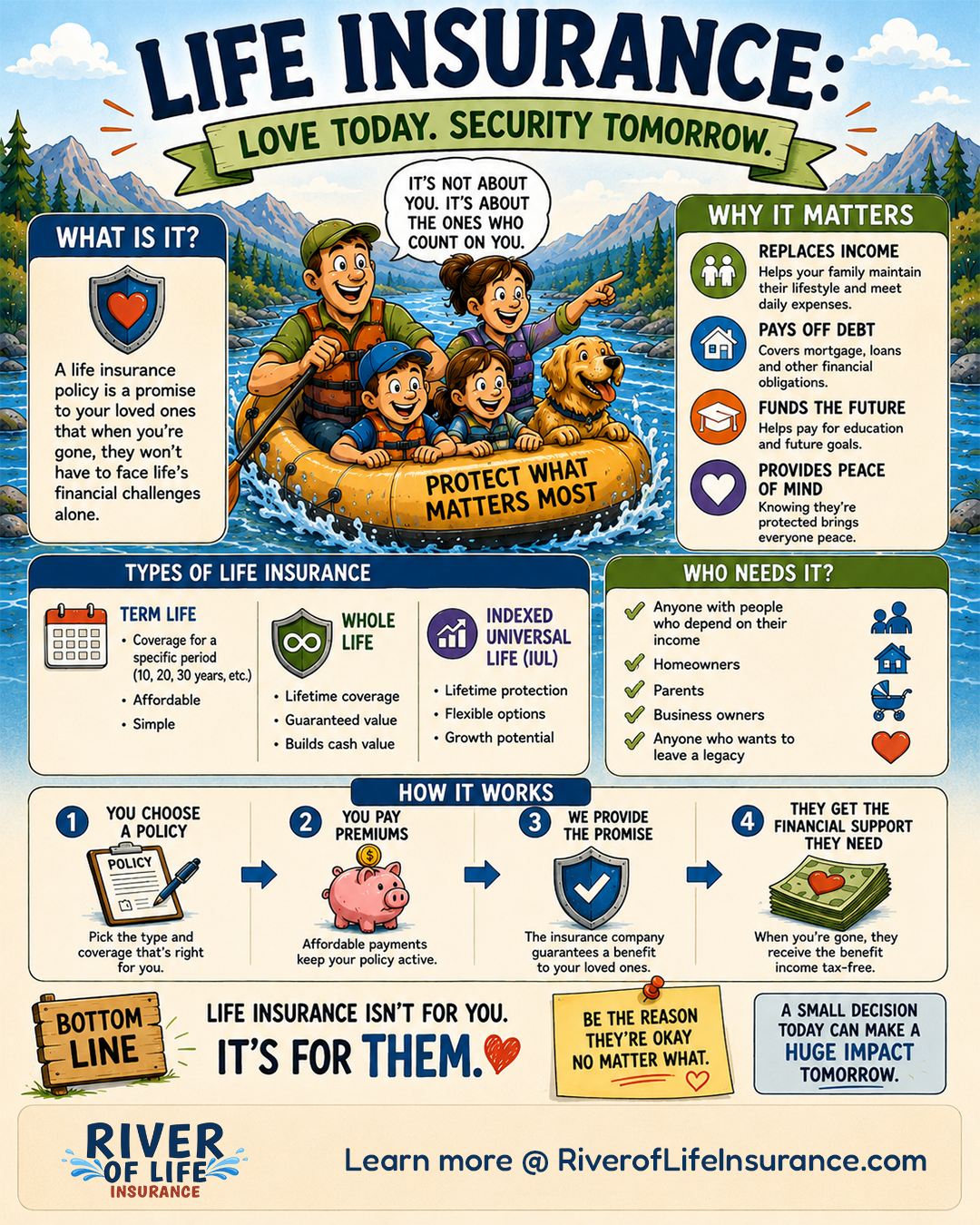
Whole life insurance is a form of permanent life insurance designed to provide coverage throughout the insured’s lifetime when contractual requirements are satisfied.
Traditional whole life generally includes permanent death benefit protection, a structured premium schedule, guaranteed cash value, access to eligible cash value, and potentially dividends on participating policies. Dividends are not guaranteed.
Cash value develops within the insurance contract over time. Depending on policy terms, the owner may eventually be able to access eligible value through withdrawals, policy loans, or surrender.
Whole life is often considered for lifelong protection, final expenses, legacy planning, estate needs, business planning, or predictable cash accumulation.
Its premiums are generally higher than term insurance because the policy is designed for permanent coverage and includes additional guarantees and value.
Start With the Financial Need
The most useful way to evaluate this topic is to begin with the financial problem rather than a product label. Identify who or what needs protection, how long the need is expected to last, what resources already exist, and what would happen if no additional planning were put in place. That framework makes it easier to separate necessary protection from optional features and to choose a solution that remains affordable over time.
Build the Decision From the Inside Out
Begin with the need, then work outward to the product. The core issues here are how loans or withdrawals would affect values and the death benefit, the need for permanent rather than temporary protection, and the guaranteed cash-value schedule. Once those are clear, evaluate the premium commitment required to maintain the policy and how participating dividends may be used if declared. This order matters because it prevents the features of a particular product from defining the problem after the fact.
A strong plan should also be understandable to the person who owns it. If the strategy only makes sense when described with a long chain of optimistic assumptions, it deserves additional scrutiny. Simpler does not always mean better, but clarity is a meaningful form of risk control.
Common Mistakes to Avoid
Treating projected dividends as guaranteed. This can create a mismatch between what the owner expects and what the policy or strategy actually provides.
Assuming early cash value will equal premiums paid. The contract language and long-term economics matter more than a simplified label.
Using whole life as a substitute for an emergency fund. Liquidity, taxes, guarantees, and opportunity cost should be considered before committing money.
Borrowing without monitoring loan interest and policy health. A strategy should be reviewed when the assumptions behind it materially change.
Buying permanent coverage when the underlying need is only temporary. The right tool is the one that solves the defined problem without creating a larger one elsewhere in the plan.
What to Confirm Before Making the Decision
Use these questions as a final check:
How long must premiums be paid under this design?
How does cash value develop in the early years?
What happens if I take a policy loan?
What permanent financial need justifies the higher premium?
Which values are guaranteed by the contract?
The answers should be consistent with the actual contract and with the rest of the financial plan, not merely with a sales illustration or a generalized online example.
When to Review This Part of the Plan
This topic deserves another look whenever the assumptions behind the original decision change. Useful review triggers include a premium or dividend change, a planned policy loan, a beneficiary change, a new estate objective, or a major shift in cash-flow needs. A review does not automatically mean a policy should be replaced or a strategy should be changed. It is simply a checkpoint to confirm that the original need still exists, the contract is behaving as expected, and the current plan still fits the household or business. If a replacement is being considered, compare the existing and proposed coverage carefully before giving up benefits, guarantees, pricing, or rights that may be difficult to recreate later.
Bottom Line
The best answer is the one that fits the actual financial objective, remains affordable, and is understood well enough to manage over time. Review the policy contract rather than relying only on marketing language, and distinguish guaranteed provisions from projections or assumptions. When tax, legal, estate, investment, or complex business issues are involved, general education should be paired with advice from the appropriately qualified professional.