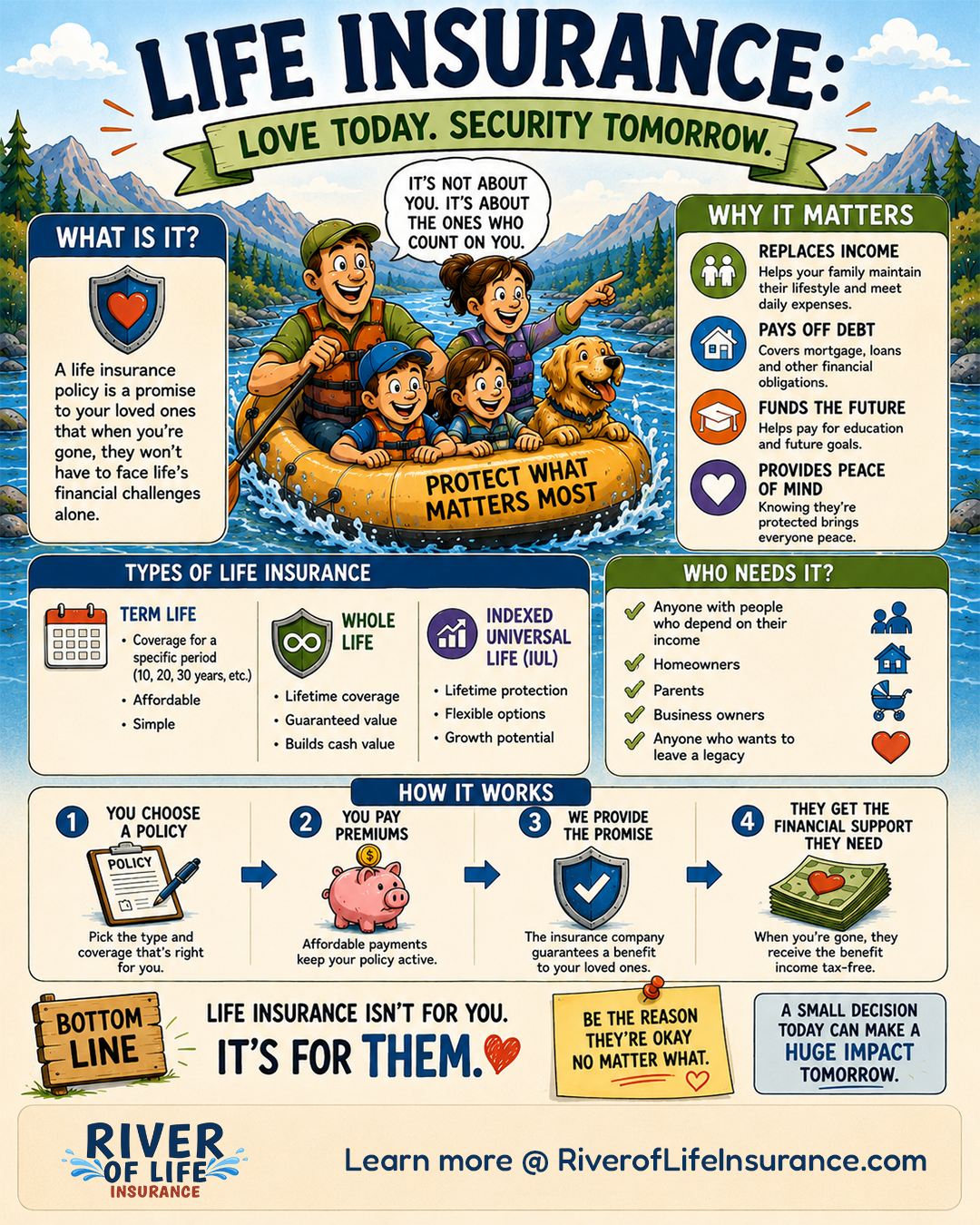
Term life insurance provides death benefit protection for a specified period of time. Common terms include 10, 15, 20, 25, and 30 years, although available options vary by carrier.
Traditional term insurance generally does not accumulate cash value. Its primary purpose is protection.
People often use term coverage for temporary needs such as replacing income while children are young, protecting a mortgage, covering debt, or protecting a spouse during working years.
Because it focuses primarily on temporary death benefit protection, term insurance can often provide a relatively large amount of coverage for a lower initial premium than permanent insurance.
When the term ends, options may include allowing the policy to expire, renewing at higher rates, converting eligible coverage to permanent insurance, or applying for a new policy.
The right term length should match the period during which your family genuinely needs the protection.
Start With the Financial Need
The most useful way to evaluate this topic is to begin with the financial problem rather than a product label. Identify who or what needs protection, how long the need is expected to last, what resources already exist, and what would happen if no additional planning were put in place. That framework makes it easier to separate necessary protection from optional features and to choose a solution that remains affordable over time.
The Details That Often Matter More Than Expected
Consumers frequently focus on the most visible feature of a policy, but long-term results can depend on less obvious details. In this case, pay attention to remaining mortgage and debt obligations, the ages of children or other dependents, and conversion privileges and the deadline for using them. Also review the number of years the protection need is expected to last and the amount of income that would need to be replaced. A small contractual detail can become important years later when someone wants to access money, change coverage, retire, sell a business, or transfer assets to heirs.
This is also why comparisons should use the same time horizon and the same objective. A product designed for temporary protection should not be judged by the same criteria as one designed for permanent coverage or retirement income. The relevant question is whether the product does its assigned job efficiently and predictably enough for the person using it.
Common Mistakes to Avoid
Canceling existing coverage before replacement coverage is fully in force. This can create a mismatch between what the owner expects and what the policy or strategy actually provides.
Shopping only on price without comparing contractual features. The contract language and long-term economics matter more than a simplified label.
Buying a term that expires before the financial need ends. Liquidity, taxes, guarantees, and opportunity cost should be considered before committing money.
Assuming renewal premiums will remain level after the original term. A strategy should be reviewed when the assumptions behind it materially change.
Ignoring conversion rights until the deadline has passed. The right tool is the one that solves the defined problem without creating a larger one elsewhere in the plan.
Questions for an Insurance or Financial Review
Bring these questions to the conversation: Would a layered term strategy better match declining obligations? How many years do I genuinely need this death benefit? What happens to the premium after the level term ends? Then confirm can i convert some or all of the policy to permanent insurance? and when does the conversion privilege expire? A clear answer should include both the benefit and the tradeoff, not just the most favorable feature.
When to Review This Part of the Plan
This topic deserves another look whenever the assumptions behind the original decision change. Useful review triggers include a term-conversion deadline, five years before expiration, a new mortgage, a child, a major income increase, or a meaningful change in health. A review does not automatically mean a policy should be replaced or a strategy should be changed. It is simply a checkpoint to confirm that the original need still exists, the contract is behaving as expected, and the current plan still fits the household or business. If a replacement is being considered, compare the existing and proposed coverage carefully before giving up benefits, guarantees, pricing, or rights that may be difficult to recreate later.
Bottom Line
The best answer is the one that fits the actual financial objective, remains affordable, and is understood well enough to manage over time. Review the policy contract rather than relying only on marketing language, and distinguish guaranteed provisions from projections or assumptions. When tax, legal, estate, investment, or complex business issues are involved, general education should be paired with advice from the appropriately qualified professional.