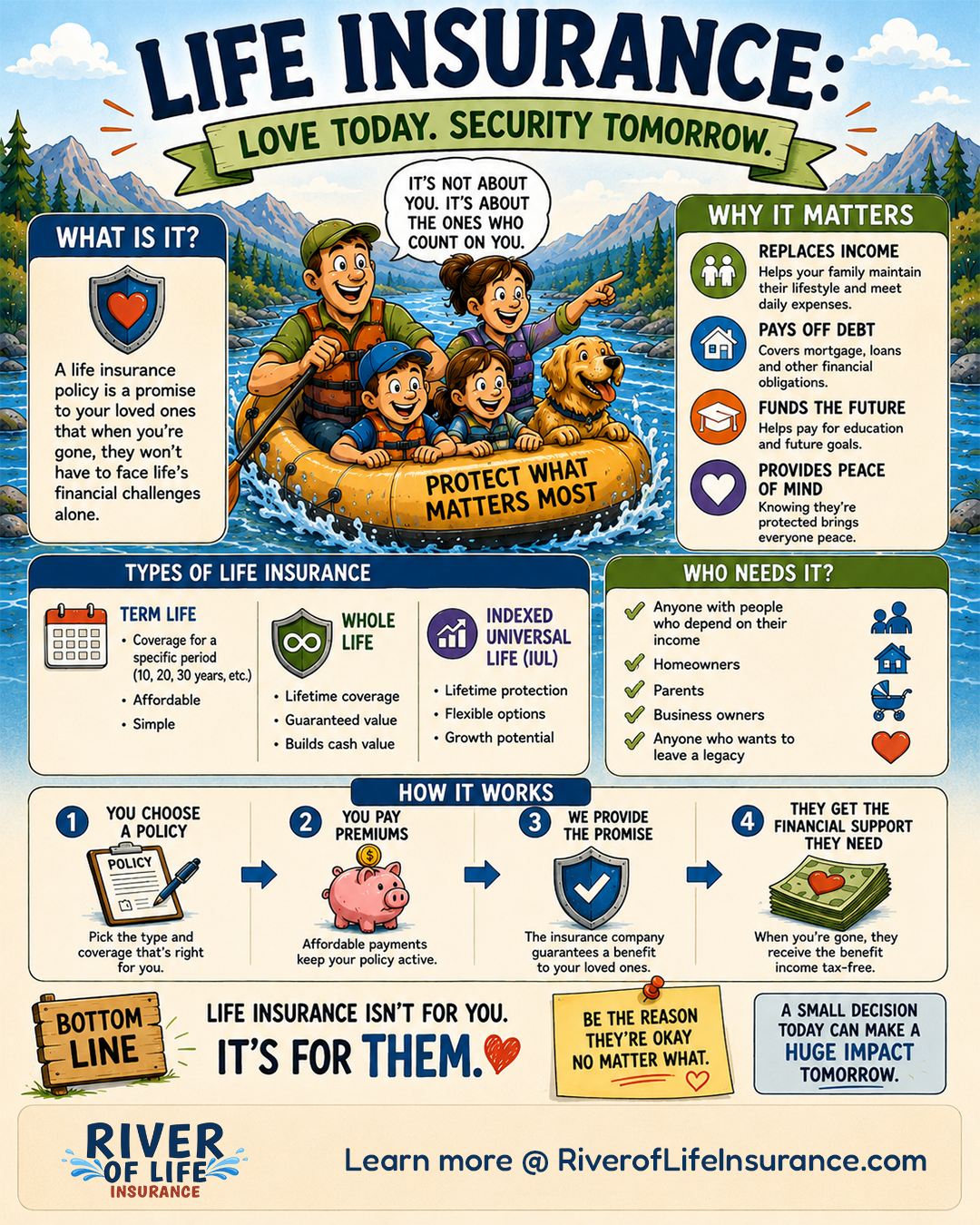
Indexed universal life insurance and whole life insurance are both forms of permanent life insurance, but they operate very differently.
Both can provide lifelong death benefit protection when properly structured and maintained. Both may accumulate cash value.
The similarities largely end there.
How Whole Life Works
Whole life insurance generally provides strong contractual guarantees.
A traditional whole life policy typically includes:
- Guaranteed death benefit
- Guaranteed premium structure
- Guaranteed cash value schedule
- Potential dividends on participating policies
Dividends are not guaranteed.
Whole life tends to emphasize predictability.
How Indexed Universal Life Works
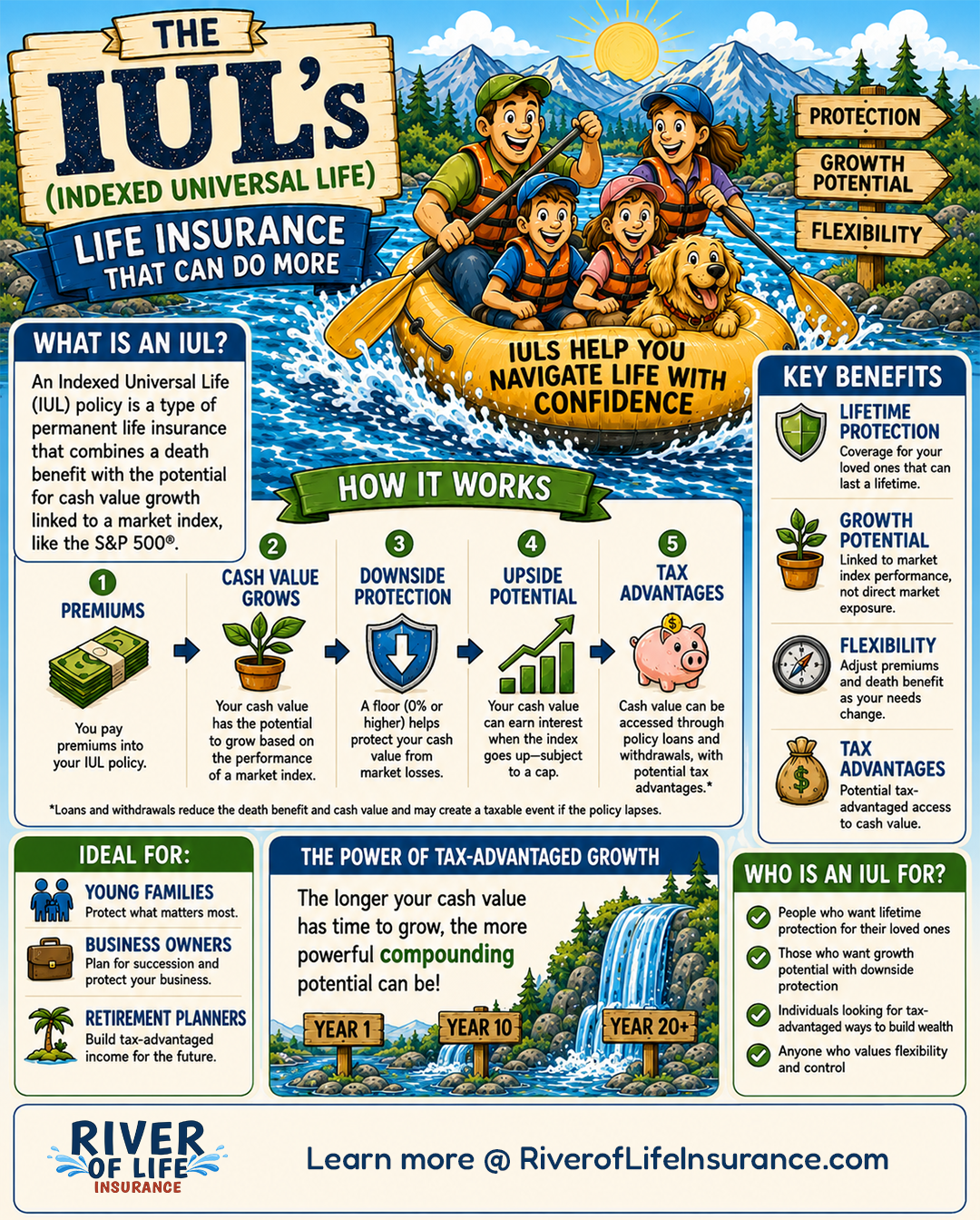
Indexed universal life, commonly called IUL, is a form of universal life insurance.
Cash value growth may receive interest credits based in part on the performance of an external market index, subject to the policy’s specific crediting rules.
The policy does not generally invest your cash value directly in the stock market.
Instead, the insurer uses an index-linked formula that may involve features such as:
- Caps
- Participation rates
- Spreads
- Floors
- Different indexed crediting strategies
These terms can change within contractual limits, depending on the policy.
Guarantees vs. Flexibility
This is one of the most important differences.
Whole life tends to provide stronger guarantees and greater predictability.
IUL generally offers greater flexibility but requires more active policy management.
Depending on the contract, an IUL owner may have flexibility regarding:
- Premium timing
- Premium amount
- Death benefit options
- Allocation among available crediting strategies
That flexibility can be useful, but it also means the policy should be monitored.
Can IUL Lose Money When the Market Falls?
Indexed crediting strategies frequently include a floor, such as 0%, that can prevent a negative index credit solely because the referenced index declined.
However, that does not mean the policy cannot lose cash value.
Policy charges, insurance costs, withdrawals, loans, and insufficient funding can reduce policy values even during a year when the indexed credit is zero.
That distinction is extremely important.
Which Has Greater Growth Potential?
An IUL may have greater potential for index-linked interest credits than the guaranteed growth offered by a traditional whole life contract.
However, those results are not guaranteed.
Whole life generally offers more certainty, while IUL involves assumptions and variables that require ongoing review.
What About Policy Loans?
Both types of policies may allow access to available cash value through policy loans.
Loans reduce available policy value and death benefit and accrue interest. Excessive borrowing can cause significant problems, including policy lapse if not properly managed.
Policy loans should therefore be part of a carefully monitored strategy rather than treated as “free money.”
Which One Is Right for You?
The answer depends on your priorities.
Whole life may appeal more to someone who values:
- Guarantees
- Predictability
- Simplicity
- Long-term permanent protection
IUL may appeal more to someone who values:
- Flexibility
- Index-linked crediting potential
- Long-term cash accumulation potential
- More active policy design and management
The important thing is not to choose a policy because of a catchy illustration or sales concept.
Choose the policy structure that fits the financial objective you are actually trying to accomplish.