Term life and whole life insurance can both provide a death benefit, but they are built to solve different financial problems.
Understanding the differences can make it much easier to determine which type of coverage may fit your goals.
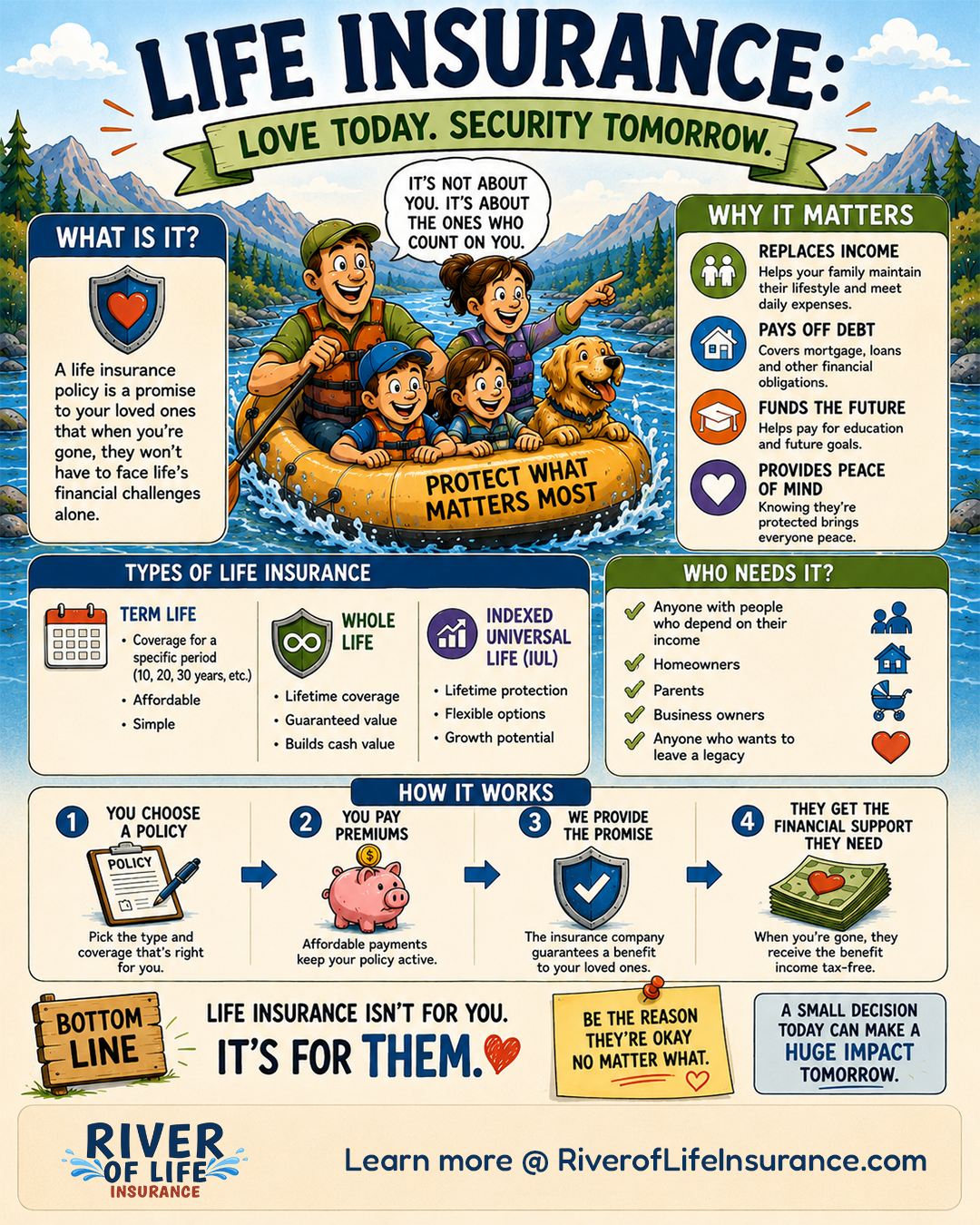
What Is Term Life Insurance?
Term insurance provides coverage for a specified period.
Common term lengths include:
- 10 years
- 15 years
- 20 years
- 30 years
If the insured dies while the coverage is in force, the beneficiary generally receives the policy’s death benefit.
Term policies usually do not build cash value.
Because they primarily provide death benefit protection, term insurance can often provide a relatively large amount of coverage for a lower initial premium than permanent insurance.
What Is Whole Life Insurance?
Whole life is a form of permanent life insurance.
It is designed to remain in force for the insured’s lifetime as long as required premiums are paid and policy requirements are satisfied.
Whole life generally includes:
- A death benefit
- Guaranteed premiums under the contract
- Guaranteed cash value accumulation
- Potential non-guaranteed dividends on participating policies
Dividends are not guaranteed.
The Biggest Difference: Temporary vs. Permanent Need
Term insurance is often appropriate when the financial need is expected to disappear.
For example, a family might want coverage until:
- Children become financially independent
- A mortgage is paid off
- Retirement assets have accumulated
- A specific debt is eliminated
Whole life may be considered when the need is expected to continue regardless of when death occurs.
Examples may include:
- Final expenses
- Legacy planning
- Estate liquidity
- Certain business planning needs
- Long-term wealth transfer strategies
What About Cost?
Term insurance generally costs less initially for the same death benefit.
Whole life typically requires higher premiums because the policy is designed for permanent coverage and includes cash value.
However, comparing premiums alone can be misleading because the products serve different purposes.
It would be similar to comparing the cost of renting something temporarily with the cost of owning something permanently.
The question is not simply, “Which costs less?”
It is, “What problem am I trying to solve?”
Can You Own Both?
Absolutely.
Many financial plans use multiple types of insurance.
For example, a family might purchase:
- Permanent coverage for lifelong needs
- Additional term insurance during high-responsibility years
This approach can create a larger total death benefit during the years when children, mortgages, and other obligations are greatest.
Which Is Better?
Neither.
Insurance products should be matched to objectives, not chosen because one category is universally superior.
Term insurance may be an excellent tool for inexpensive temporary protection.
Whole life may be appropriate when guarantees, permanent coverage, or cash value accumulation are important.
A good strategy begins with the goal and works backward to the product.